MSME AI Productivity Tools
Transforming Sales, Service, Operations
The business world is changing fast. New technology appears every day, and companies that adapt quickly often win. For Indian Micro, Small, and Medium Enterprises (MSMEs), this change brings both challenges and huge opportunities. Artificial Intelligence (AI) is no longer just for big tech companies or large corporations. Today, AI tools are becoming affordable and easy to use for smaller businesses too. MSME AI productivity tools are becoming affordable and accessible for smaller businesses.
Indian MSMEs face unique challenges. They often work with limited budgets, small teams, and tight deadlines. Competition is fierce, both from local players and global companies. Customer expectations are rising, and business processes need to be faster and more efficient. Many MSME owners juggle multiple roles – from sales and marketing to operations and customer service. This makes it hard to focus on growth and innovation.
AI Power for Indian MSME’s
But here’s the good news. AI can help solve many of these problems. It can automate routine tasks, provide valuable insights, and help make better decisions. MSME AI productivity tools can handle customer queries, analyze sales data, manage finances, and create marketing content. The best part is that many of these tools are designed specifically for smaller businesses. They don’t require technical expertise or huge investments.
The Indian government also recognizes the potential of AI for MSMEs. Through various initiatives and funding programs, they are making it easier for small businesses to adopt AI technologies. The IndiaAI Mission, launched recently, includes special support for MSMEs through grants and resources. This means Indian small businesses have access to both cutting-edge technology and government backing.
This article will explore how AI can transform different areas of your business. We’ll look at specific tools and platforms that are working well for Indian MSMEs. You’ll learn about practical applications in sales, customer service, operations, and more. We’ll also cover government initiatives that can help fund your AI journey. The goal is simple: to show you how AI can make your business more productive, efficient, and competitive.
The potential is enormous. Companies using AI report significant improvements in productivity and cost savings. They can serve customers better, make faster decisions, and focus their human resources on high-value activities. For Indian MSMEs, this technology represents a chance to compete on equal footing with larger companies and even expand into global markets.
AI in Sales & Marketing
Sales and marketing are often the lifeblood of any MSME. Getting new customers and keeping existing ones happy requires constant effort and smart strategies. Traditional sales processes involve a lot of manual work – tracking leads, following up with prospects, analyzing customer behavior, and creating marketing content. This takes time and resources that many MSMEs simply don’t have. AI is changing this landscape by automating routine tasks and providing insights that help sales teams work smarter, not harder.
Zoho CRM AI Automation with Zia Assistant
Zoho CRM is one of the most popular customer relationship management platforms in India, and for good reason. It’s affordable, easy to use, and designed with Indian businesses in mind. But what makes it really powerful is Zia, Zoho’s AI assistant. Zia doesn’t just store customer information – it actively helps your sales team make better decisions and close more deals.
Zoho CRM AI automation through Zia’s predictive lead scoring is perhaps its most valuable feature. Instead of treating all leads equally, AI sales lead scoring through Zia analyzes past data to predict conversion probability into paying customers. It looks at factors like how often a prospect visits your website, which pages they view, how they respond to emails, and their engagement with your content. Based on this analysis, Zia gives each lead a score from 1 to 100. Leads with higher scores deserve immediate attention, while lower-scored leads can be nurtured through automated campaigns.
For an Indian MSME selling handmade textiles, this means the sales team can focus their limited time on prospects who are actually ready to buy, rather than chasing cold leads. If Zia identifies that prospects who download your product catalog and visit your pricing page multiple times are 80% likely to purchase within a week, your team knows exactly where to focus their efforts. This targeted approach can double or triple conversion rates while reducing the time spent on unproductive activities.
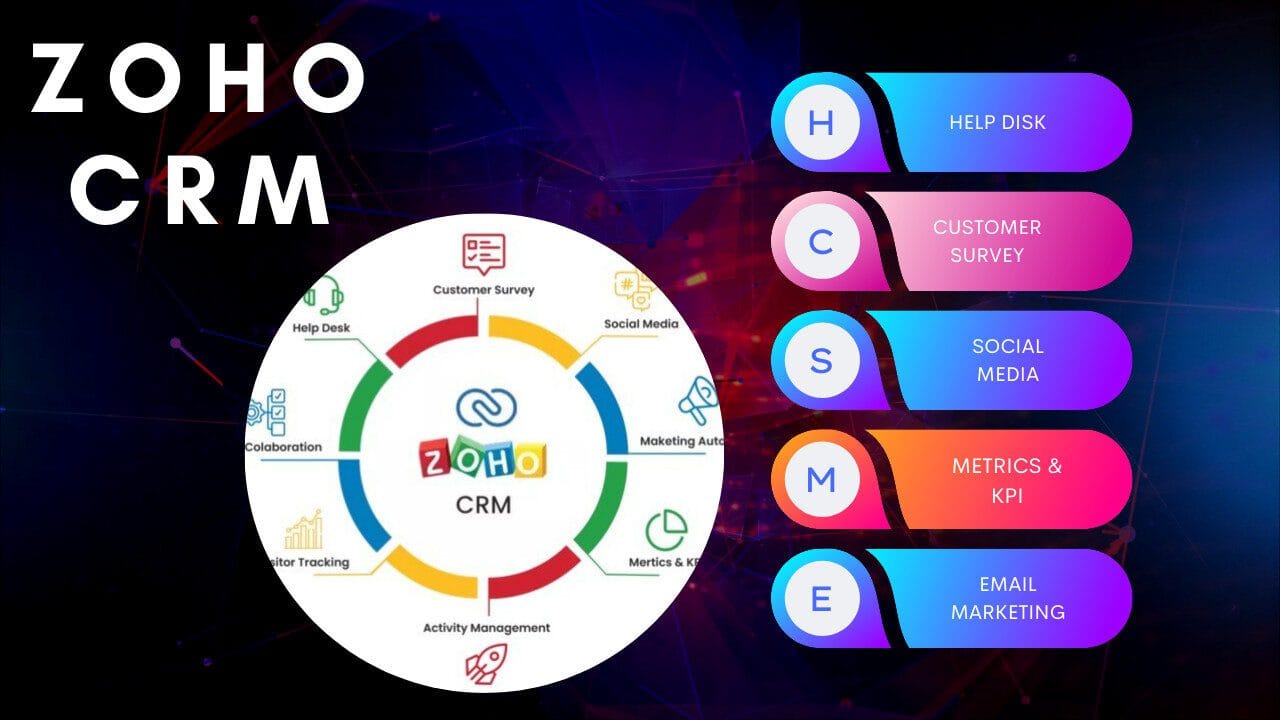
Zia also offers conversation analysis that works particularly well for phone-heavy sales environments common in India. When your sales representatives make calls or have meetings, Zia can analyze the conversation content and sentiment. It identifies key topics discussed, tracks customer concerns, and even suggests follow-up actions. If a customer mentions budget constraints during a call, Zia will flag this and suggest offering flexible payment terms or highlighting cost-effective product options. This level of analysis helps sales teams understand customer needs better and respond more effectively.
The lead prioritization feature goes beyond simple scoring. Zia looks at your sales team’s current workload and suggests which leads each person should contact first. It considers factors like the salesperson’s success rate with similar leads, their current pipeline, and the urgency of each opportunity. For a Mumbai-based software development company, this might mean assigning enterprise leads to your most experienced salesperson while directing startup inquiries to team members who understand the startup ecosystem better.
Freshsales by Freshworks
Freshworks, headquartered in Chennai, has built Freshsales specifically with Indian businesses in mind. The platform understands local business practices, supports multiple Indian languages, and integrates well with popular Indian payment systems and business tools. Its AI-driven features are designed to work within the context of how Indian businesses actually operate, not just how Silicon Valley companies think they should operate.
The AI-driven contact scoring in Freshsales goes beyond traditional lead scoring. It analyzes not just individual prospects but entire organizations and their buying patterns. For example, if you’re selling office furniture to small businesses, Freshsales AI might notice that companies in the IT services sector typically purchase during certain months, prefer specific product categories, and have particular budget ranges. This organizational intelligence helps you time your outreach better and tailor your approach to different industry segments.
Sales insights generated by Freshsales AI can reveal patterns that human analysis might miss. The system might discover that prospects who engage with your content on LinkedIn are 40% more likely to respond to WhatsApp messages than email. Or it might find that customers from certain cities prefer phone calls over digital communication. For an Indian handicrafts business selling both domestically and internationally, these insights could reveal that domestic customers prefer detailed product information and multiple images, while international customers focus more on shipping costs and delivery times.
The platform’s AI also provides territory and quota management suggestions. If you have sales representatives covering different regions of India, the AI can analyze performance data and suggest optimal territory boundaries, quota distributions, and resource allocation. It might recommend shifting focus from tier-2 cities where competition is intense to tier-3 cities where demand is growing but competition is limited. This strategic guidance helps MSMEs make data-driven decisions about expansion and resource allocation.
Freshsales AI also excels at identifying cross-selling and upselling opportunities. By analyzing purchase histories and customer behavior patterns, it can suggest complementary products or service upgrades at the right time. For a Delhi-based catering service, the AI might identify that clients who book wedding services are often interested in corporate catering packages six months later. This timing intelligence helps sales teams reach out with relevant offers when customers are most receptive.
AI in Customer Service
Customer service can make or break an MSME. Indian customers have high expectations for responsive, helpful service, but providing excellent support 24/7 is expensive and challenging for smaller businesses. Traditional customer service requires hiring and training staff, managing multiple communication channels, and maintaining consistent service quality. AI is transforming customer service by handling routine inquiries automatically and helping human agents work more effectively on complex issues.
AI Customer Service Chatbots for Business Support
Modern AI customer service chatbots have moved far beyond simple keyword matching. They can understand natural language, maintain context throughout conversations, and even handle complex queries that require accessing multiple systems. For Indian MSMEs, chatbots offer a way to provide instant customer support without the overhead of a large customer service team.
The most immediate benefit is handling frequently asked questions. Every business gets the same questions repeatedly – about business hours, product availability, pricing, shipping policies, and return procedures. An AI chatbot can answer these questions instantly, any time of day or night. For a Chennai-based electronics retailer, this might mean customers can check product specifications, compare models, and even place orders through WhatsApp or the company website without human intervention. This reduces the workload on human agents and ensures customers get immediate responses.

But AI chatbots can do much more than answer simple questions. They can integrate with your inventory management system to provide real-time stock updates, connect with shipping systems to track order status, and even access customer purchase history to provide personalized recommendations. When a customer asks about their order status, the chatbot doesn’t just say “we’ll check and get back to you.” It immediately accesses the shipping system and provides specific tracking information, estimated delivery dates, and options for modifying the delivery.
For businesses dealing with technical products or services, chatbots can guide customers through troubleshooting processes. A Bangalore-based software company’s chatbot might walk customers through common installation issues, password reset procedures, or feature setup guides. The chatbot can ask diagnostic questions, analyze responses, and provide step-by-step solutions. If the issue is too complex for automated resolution, the chatbot seamlessly transfers the conversation to a human agent along with all the context gathered during the initial interaction.
Language support is particularly important in the Indian market. Modern AI chatbots can handle multiple Indian languages and even switch languages mid-conversation based on customer preference. A customer might start a conversation in English but switch to Hindi when explaining a complex problem. The chatbot adapts seamlessly, ensuring comfortable communication throughout the interaction.
Loom for Communication and Training
Loom represents a different but equally valuable application of AI in customer service. This screen recording platform uses AI to automatically generate transcripts and summaries of recorded videos, making it incredibly useful for training customer service staff and creating self-service resources for customers.
Training new customer service representatives traditionally requires significant time investment from experienced staff. With Loom, experienced agents can record themselves handling different types of customer interactions, explaining company policies, or demonstrating product features. The AI automatically generates searchable transcripts, making it easy for new hires to find specific information quickly. For example, a new agent dealing with a refund request can search for “refund policy” in the transcript library and immediately find relevant training videos.
The AI transcript generation feature also makes Loom valuable for creating customer self-service resources. Instead of writing lengthy help articles, businesses can record quick video explanations of common procedures. The AI-generated transcripts make these videos searchable and accessible to customers who prefer reading over watching videos. A Pune-based e-commerce company might record videos showing how to return products, track orders, or use loyalty points. Customers can quickly find the information they need without contacting customer service.
For troubleshooting complex technical issues, Loom enables customer service agents to create personalized video responses. Instead of typing lengthy explanations or trying to guide customers through multiple steps over the phone, agents can record their screen while demonstrating the solution. The AI transcript ensures customers can refer back to specific steps without rewatching the entire video. This approach is particularly effective for software companies or businesses selling technical products.
AI in Operations
Operations is where many MSMEs struggle the most. Managing finances, tracking inventory, forecasting demand, and optimizing processes requires significant analytical capabilities and time. Traditional operational management often relies on spreadsheets, manual calculations, and gut feelings. AI is revolutionizing operations by automating complex tasks, providing predictive insights, and identifying optimization opportunities that humans might miss.
TallyPrime AI Integration for Financial Management
TallyPrime is already the backbone of financial management for countless Indian MSMEs. TallyPrime AI integration incorporates features that transform routine accounting tasks into automated, intelligent processes. These AI capabilities don’t just save time – they improve accuracy and provide insights that help businesses make better financial decisions.
Invoice processing automation represents one of the most practical AI applications in TallyPrime. Instead of manually entering invoice data, the AI can read invoices from various formats – PDF files, scanned documents, or even photographs taken with a mobile phone. It extracts key information like vendor details, amounts, dates, and tax information, then automatically creates entries in the accounting system. For a Kolkata-based trading company processing hundreds of invoices monthly, this feature can reduce data entry time by 80% while eliminating human errors that often occur during manual entry.
The reconciliation automation goes beyond simple matching. TallyPrime’s AI analyzes bank statements and automatically matches transactions with accounting entries, even when there are slight discrepancies in dates or descriptions. It can identify patterns in your business transactions and learn to handle routine reconciliation tasks with minimal human oversight. If your business regularly receives payments through multiple channels – bank transfers, digital wallets, and cash – the AI learns to recognize these patterns and reconcile them accurately.
Procurement automation uses AI to analyze your purchase patterns and suggest optimal ordering schedules. The system tracks inventory levels, analyzes seasonal demand patterns, and considers supplier lead times to recommend when and how much to order. For a restaurant in Hyderabad, this might mean automatically generating purchase orders for ingredients based on menu popularity, seasonal trends, and upcoming events. The AI can even suggest alternative suppliers when your regular vendors are unavailable or when better pricing options become available.
AI Financial Forecasting Software for Business Planning
AI financial forecasting software eliminates the complex spreadsheet models and significant analytical expertise. AI democratizes this capability by automatically analyzing historical financial data and generating accurate forecasts with minimal manual intervention. These forecasts help MSMEs plan cash flow, budget for expansion, and make informed strategic decisions.
Modern AI forecasting systems analyze multiple data streams simultaneously. They look at your sales history, seasonal patterns, market trends, economic indicators, and even external factors like weather or local events. For a seasonal business like a summer clothing retailer, the AI considers not just last year’s sales data but also weather forecasts, fashion trends, and economic conditions to predict demand more accurately than traditional methods.
The AI can identify subtle patterns that human analysis might miss. It might discover that your sales increase by 15% in the two weeks following major festivals, or that certain products perform better during specific weather conditions. These insights enable better inventory planning and cash flow management. A Mumbai-based gift shop might learn that corporate orders spike during specific months, allowing better staff scheduling and inventory preparation.
Risk assessment is another crucial aspect of AI-powered forecasting. The system can identify potential cash flow problems months in advance, suggesting corrective actions before issues become critical. It might recommend adjusting payment terms with customers, negotiating extended payment schedules with suppliers, or identifying the optimal timing for business investments.
Business Intelligence Automation Tools for Data Analysis

Business intelligence automation tools in TallyPrime provide MSMEs with advanced analytics previously available only to larger companies with dedicated analysts. The system automatically generates insights about market trends, customer behavior, and operational efficiency without requiring manual report creation or data analysis expertise.
Market trend analysis helps businesses understand their position within broader economic conditions. The AI compares your business performance with anonymized industry benchmarks, identifying areas of strength and opportunities for improvement. For example, if your profit margins are below industry average, the system might suggest specific cost reduction strategies or pricing adjustments based on what works for similar businesses.
Supply chain optimization uses AI to identify bottlenecks and inefficiencies in your procurement and inventory management. The system might discover that certain suppliers consistently deliver late, affecting your ability to fulfill customer orders on time. It can suggest alternative suppliers or recommend adjusting your ordering schedule to account for these delays. For a manufacturing MSME, this intelligence can significantly improve production planning and customer satisfaction.
Customer segmentation analysis helps identify your most valuable customer groups and their purchasing patterns. The AI might reveal that customers from certain geographic regions have higher lifetime values, prefer specific products, or respond better to particular marketing approaches. This information enables more targeted marketing campaigns and better resource allocation for customer acquisition and retention efforts.
AI in Data Analysis and Content Creation

Content creation and data analysis are often overlooked by MSMEs due to time and resource constraints. However, these activities are crucial for marketing success and informed decision-making. AI tools are making it possible for small businesses to produce professional content and gain valuable insights from their data without hiring specialized staff or agencies.
AI Content Creation Tools: Jasper Platform Guide
Jasper represents leading AI content creation tools for business writing that understands the specific needs of businesses creating marketing content. Unlike generic AI tools, Jasper is trained specifically for business communication and marketing purposes, making it particularly valuable for MSMEs that need professional content but lack dedicated marketing teams.
The platform excels at creating social media content that engages audiences and drives engagement. For an Indian handicrafts business, Jasper can generate Instagram captions that highlight product uniqueness, tell brand stories, and include relevant hashtags for maximum reach. The AI understands cultural nuances and can create content that resonates with Indian audiences while maintaining brand consistency across different social media platforms.
Website copy creation is another area where Jasper provides significant value. The AI can generate product descriptions, service pages, about us content, and landing page copy that converts visitors into customers. For a Jaipur-based jewelry business, Jasper might create product descriptions that highlight craftsmanship, cultural significance, and quality materials in language that appeals to both domestic and international customers. The AI can adapt the tone and style for different target audiences within the same business.

Advertisement text generation helps MSMEs create compelling ad copy for Google Ads, Facebook campaigns, and other digital marketing platforms. Jasper analyzes successful ad patterns and generates variations that test different approaches to the same message. This capability is particularly valuable for businesses running multiple campaigns or testing different marketing messages to find the most effective approach.
Blog content creation enables MSMEs to maintain active content marketing without dedicating significant time to writing. Jasper can research topics, create outlines, and generate full articles that establish thought leadership and improve search engine rankings. The AI ensures content is relevant to your industry and target audience while maintaining SEO best practices.
Otter.ai for Meeting Intelligence
Meetings consume significant time in any business, but capturing and sharing meeting insights often requires additional effort that many MSMEs can’t spare. Otter.ai uses advanced speech recognition and AI analysis to automatically transcribe conversations and generate actionable summaries, making meeting time more productive and ensuring important information isn’t lost.
Real-time transcription allows meeting participants to focus on the conversation rather than taking notes. The AI accurately captures spoken words even in environments with multiple speakers or background noise. For a design agency in Gurgaon conducting client meetings, this means team members can give full attention to client requirements and creative discussions while ensuring all details are accurately recorded for future reference.
Meeting summary generation goes beyond simple transcription. The AI identifies key decisions, action items, and important discussion points, creating structured summaries that highlight what matters most. Instead of reading through lengthy transcripts, team members can quickly review a concise summary that captures the essential outcomes and next steps from each meeting.
Speaker identification and conversation analysis provide insights into meeting dynamics and participation patterns. The AI can identify who spoke most, which topics generated the most discussion, and how much time was spent on different agenda items. This information helps optimize future meetings and ensure balanced participation from all team members.
Integration capabilities allow Otter.ai to work seamlessly with popular video conferencing platforms and calendar applications. Meetings are automatically transcribed and summaries are shared with relevant team members without manual intervention. This integration ensures meeting intelligence becomes part of normal business workflows rather than an additional task to manage.
AI in HR & Payroll
Human resource management and payroll processing often consume disproportionate time and energy for MSME owners who would prefer focusing on core business activities. Traditional HR processes involve manual data entry, complex calculations, and constant attention to changing regulations. AI-powered HR platforms are automating these processes while providing insights that help businesses manage their workforce more effectively.
BambooHR for Comprehensive HR Management
BambooHR provides AI-driven solutions that handle everything from employee onboarding to performance management, making it easier for MSMEs to maintain professional HR practices without dedicated HR staff. The platform’s AI capabilities learn from your organization’s patterns and suggest improvements to HR processes based on data rather than guesswork.
Automated payroll processing eliminates the time-consuming calculations and regulatory compliance checks that traditionally require significant attention. The AI ensures accurate salary calculations, tax deductions, and compliance with changing labor laws and regulations. For a growing IT services company in Bengaluru, this means payroll processing that previously took days can be completed in hours with greater accuracy and compliance assurance.
Benefits management automation helps employees understand and utilize their benefits while reducing administrative overhead for business owners. The AI can answer employee questions about health insurance, leave policies, and other benefits without requiring HR intervention. It also tracks benefit utilization and suggests plan improvements based on employee needs and usage patterns.
Employee performance tracking uses AI to identify patterns in productivity, attendance, and engagement. The system can highlight top performers, identify employees who might need additional support, and suggest professional development opportunities. This intelligence helps MSMEs make better decisions about promotions, training investments, and resource allocation.
Gusto for Streamlined Operations
Gusto focuses specifically on simplifying payroll and benefits management for smaller businesses. Its AI capabilities are designed to handle the complexity of tax regulations and benefit calculations while presenting simple interfaces that non-HR experts can easily use.
Automated tax filing and compliance management ensures your business stays current with changing regulations without requiring constant attention to regulatory updates. The AI monitors changes in tax laws, labor regulations, and reporting requirements, automatically updating calculations and processes to maintain compliance. This capability is particularly valuable for MSMEs that lack dedicated accounting or HR expertise.

Employee self-service features powered by AI allow team members to access pay stubs, update personal information, request time off, and get answers to common questions without contacting management. This reduces administrative workload while providing employees with immediate access to the information they need.
Zenefits for Integrated Business Management
Zenefits provides an integrated platform that combines HR, payroll, and benefits management with business intelligence features. Its AI capabilities provide insights into workforce trends, cost optimization opportunities, and operational efficiency improvements.
Workforce analytics help identify patterns in employee satisfaction, turnover rates, and productivity metrics. The AI can predict which employees might be considering leaving, suggest retention strategies, and identify the most effective hiring sources for your business. For a retail chain expanding across multiple cities, these insights enable better workforce planning and reduced turnover costs.
Cost optimization suggestions analyze your current HR expenses and suggest ways to reduce costs without compromising employee satisfaction. The AI might recommend more cost-effective benefit plans, identify unused services, or suggest timing changes for major HR activities to take advantage of seasonal cost variations.

AI in Legal & Compliance
Legal and compliance requirements often overwhelm MSMEs, particularly as regulations become more complex and penalties for non-compliance increase. Traditional legal processes require significant expertise and time investment that many smaller businesses struggle to provide. AI is making legal and compliance management more accessible and affordable for MSMEs.
Vakilsearch for Intelligent Legal Support

Vakilsearch has integrated AI capabilities that help MSMEs navigate legal and compliance requirements more efficiently. The platform’s AI can extract and analyze information from complex legal documents, making it easier for business owners to understand their obligations and requirements without extensive legal expertise.
Document analysis and information extraction capabilities allow the AI to read through lengthy legal documents, contracts, and regulatory filings to identify key information, deadlines, and requirements. For a manufacturing company dealing with multiple supplier contracts, the AI can extract payment terms, delivery requirements, penalty clauses, and renewal dates from dozens of contracts, presenting this information in a clear, organized format.
Tax document processing uses AI to analyze tax filings, identify potential issues, and suggest optimization opportunities. The system can review your previous tax returns, identify patterns in deductions and credits, and recommend strategies for reducing tax liability while maintaining full compliance with regulations.
Compliance deadline tracking ensures your business never misses important filing dates or regulatory requirements. The AI monitors your business activities and automatically identifies applicable deadlines, sending reminders and preparing necessary documentation in advance. This proactive approach prevents costly penalties and ensures smooth regulatory compliance.
Government Initiatives and Support
The Indian government recognizes AI as a crucial technology for economic growth and competitiveness. Through various initiatives and funding programs, they are actively supporting MSME adoption of AI technologies, making advanced tools more accessible and affordable for smaller businesses.
IndiaAI Mission Grants: Fast Track Funding for MSMEs
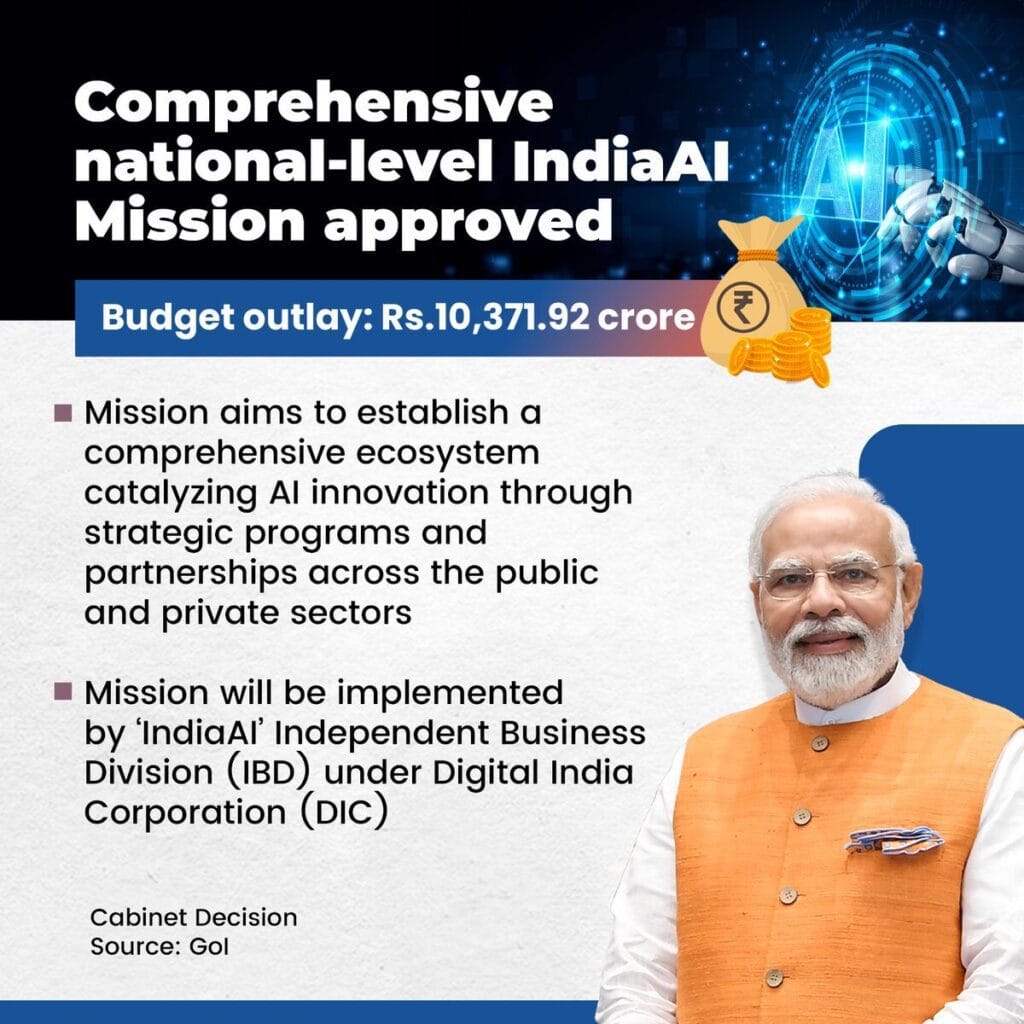
IndiaAI mission grants represent the government’s comprehensive funding approach to promoting AI adoption across Indian businesses, with special focus on MSMEs through dedicated grant programs and support services. This initiative recognizes that smaller businesses need both financial support and technical guidance to successfully implement AI solutions.
The Fast Track Grants program provides direct financial support up to ₹25 lakh for MSMEs implementing AI solutions in their business operations. These grants are designed to cover technology acquisition costs, implementation services, and training expenses that might otherwise be prohibitive for smaller businesses. The application process is streamlined to reduce bureaucratic barriers and accelerate funding disbursement.
Priority access to IndiaAI Compute Cloud gives MSMEs access to high-performance computing resources needed for AI applications without the capital investment required for dedicated hardware. This cloud-based approach enables smaller businesses to utilize sophisticated AI tools and run complex analyses that would otherwise require expensive infrastructure investments.
AI mentorship programs connect MSMEs with experienced AI practitioners and industry experts who provide guidance on technology selection, implementation strategies, and best practices for AI adoption. These mentors understand both the technical aspects of AI and the practical challenges faced by Indian MSMEs, providing relevant advice that considers local business conditions and constraints.
Export-readiness bootcamps help MSMEs prepare their AI-enhanced operations for international markets. These programs cover global quality standards, international compliance requirements, and export documentation processes. For businesses using AI to improve product quality or operational efficiency, these bootcamps provide the knowledge needed to leverage AI improvements for international expansion.
The ₹10,372 crore budget allocated for the IndiaAI Mission demonstrates the government’s serious commitment to AI adoption across the Indian economy. This substantial investment ensures sustained support for MSME AI initiatives and continuous program development based on evolving business needs and technological capabilities.
Application processes for these grants are designed with MSME constraints in mind. The government has simplified documentation requirements, reduced approval timelines, and created online portals that make it easy for business owners to apply without requiring external consultants or complex paperwork.
MSME AI Productivity Tools: Benefits and ROI Analysis
The transformation potential of AI for Indian MSMEs extends far beyond simple automation or cost reduction. AI adoption creates fundamental improvements in how businesses operate, compete, and grow in an increasingly digital economy.
MSME AI Productivity Tools: Efficiency Performance Guide
AI dramatically increases productivity by automating routine tasks and enabling employees to focus on high-value activities that require human creativity and judgment. For a typical Indian MSME, this might mean sales representatives spending more time building customer relationships instead of updating spreadsheets, or business owners focusing on strategy instead of managing routine operations.
Process optimization through AI identifies inefficiencies that human observation might miss. The technology analyzes workflows, identifies bottlenecks, and suggests improvements based on data rather than assumptions. A logistics company might discover that certain delivery routes are consistently inefficient, leading to route optimization that reduces fuel costs and improves customer satisfaction.
Resource allocation becomes more precise with AI insights. Instead of distributing resources evenly or based on intuition, businesses can allocate staff time, marketing budgets, and inventory investments based on predicted returns and identified opportunities. This precision reduces waste and maximizes the impact of limited resources.
Enhanced Customer Experience and Satisfaction
AI enables MSMEs to provide customer experiences that rival those offered by much larger companies. Personalized service recommendations, instant query responses, and proactive problem resolution create customer satisfaction levels that build loyalty and encourage word-of-mouth marketing.
24/7 availability through AI-powered chatbots and automated systems ensures customers can interact with your business whenever convenient for them. This accessibility is particularly important in India’s diverse time zones and varied work schedules, ensuring you never miss customer opportunities due to availability constraints.
Predictive customer service uses AI to identify potential problems before customers experience them. By analyzing usage patterns, feedback trends, and historical issues, AI systems can proactively address concerns and prevent customer dissatisfaction.
Competitive Advantage in Local and Global Markets
AI adoption provides Indian MSMEs with capabilities traditionally available only to larger corporations, leveling the competitive playing field and enabling smaller businesses to compete effectively against established players. This democratization of advanced technology creates opportunities for innovation and market disruption.
Global market readiness improves when AI systems help MSMEs meet international quality standards, comply with export regulations, and communicate effectively with international customers. Local language AI capabilities can translate communications, while quality management systems ensure consistency that meets global expectations.
Innovation acceleration occurs when AI handles routine operations, freeing up human resources for creative problem-solving and business development. This shift from operational focus to strategic focus enables MSMEs to develop new products, services, and business models more rapidly.
Cost Reduction and Strategic Savings

The MSME Strategy emphasizes cost optimization as a crucial factor for business sustainability and growth. AI contributes to cost reduction through multiple mechanisms that compound over time to create significant savings.
Labor cost optimization doesn’t necessarily mean reducing staff, but rather ensuring human resources focus on activities that generate maximum value. AI automation handles routine tasks at a fraction of the cost while improving accuracy and consistency.
Error reduction through AI automation prevents costly mistakes in accounting, inventory management, customer service, and compliance. These prevented errors often save more money than the cost of AI implementation itself.
Customization for Local Indian Business Needs
AI solutions designed specifically for Indian businesses understand local market conditions, regulatory requirements, and cultural preferences. Platforms like Dx-EDGE provide AI capabilities tailored to Indian business practices, supporting local languages, and integrating with popular Indian business tools and payment systems.
Local language support ensures AI systems can communicate effectively with customers and employees who prefer regional languages over English. This capability is crucial for businesses serving diverse Indian markets where language preferences vary significantly by region and demographic.
Cultural sensitivity in AI applications ensures that automated systems understand and respect Indian business customs, festival schedules, and communication preferences. This cultural intelligence helps maintain the personal touch that Indian customers value while gaining the efficiency benefits of automation.

Regulatory compliance automation understands Indian tax laws, labor regulations, and industry-specific requirements, ensuring AI implementations support rather than complicate legal compliance efforts.
Conclusion
AI technology represents a transformative opportunity for Indian MSMEs to overcome traditional constraints and compete effectively in both domestic and international markets. The combination of increasingly affordable AI tools, government support programs, and platforms designed specifically for Indian businesses creates an environment where smaller companies can access capabilities previously reserved for large corporations.
The journey toward AI adoption doesn’t require massive investments or complete business overhauls. MSMEs can start with specific areas where AI provides immediate value – perhaps customer service automation or sales lead scoring – and gradually expand AI applications as they see results and build confidence with the technology.
Government initiatives like the IndiaAI Mission Fast Track Grants provide both financial support and technical guidance to ensure successful AI implementation. These programs recognize the unique challenges faced by Indian MSMEs and provide targeted assistance that addresses real business needs rather than theoretical technology capabilities.
The time to explore AI adoption is now. The technology has matured to the point where implementation is straightforward, costs are manageable, and results are measurable. MSMEs that embrace AI today will build competitive advantages that compound over time, while those who delay risk falling behind competitors who leverage these powerful tools.

Your business’s future success may well depend on how effectively you integrate AI into your operations, customer service, and strategic planning. These MSME AI productivity tools are available, government support is strong, and potential returns are substantial. The question isn’t whether AI will transform Indian business – it’s whether your MSME will be part of that transformation or left behind by it.
Start exploring AI tools relevant to your industry and business model. Connect with the government programs designed to support your AI journey. Most importantly, begin implementing AI solutions that address your most pressing business challenges. The future of Indian MSMEs is bright, and AI will play a crucial role in realizing that potential.